
← TOOLSTOOLS — PREGONERO

PREGONERO

the town crier

Solo en inglés

Pregonero is the part that works while I am singing. It puts the line on the wall behind me, in the language the room speaks, and then gets out of the way.

IN USE · BOMFESTIVAL · PC HOEGAARDEN · DE KOERMIT
Open Studio Day, De Koer, Ghent — the animation carries the song and the line rides on top of it; the room reads it without anyone stopping to explain.
THREE WAYS TO DRIVE IT

A live song does not run to a clock. Verses stretch, a line waits for the room, and a film does not wait at all. So the words have to follow whatever is really carrying the song, and three things can.

PEDAL-DRIVEN

Most songs have no film behind them, so nothing outside me knows where I am. I advance each line with a pedal at my feet. Live tempo is not a metronome: verses stretch, a line waits for the room, and a foot handles that better than any clock. The words move when I move.
BOMfestival, Ghent — a screen on an easel carrying one line at a time, with nothing behind the words. This is the mode running on its own.

CLOCK-DRIVEN

Some songs carry their timings in the file. Then the pedal is a starting gun rather than a metronome: one press to begin, and the song's own clock moves the lines while both my hands stay on the guitar. One more press hands the pedal back for the rest of that song. The manual way is always underneath the automatic one, and it always wins. A live performance does not get a second take.

ANIMATION-DRIVEN

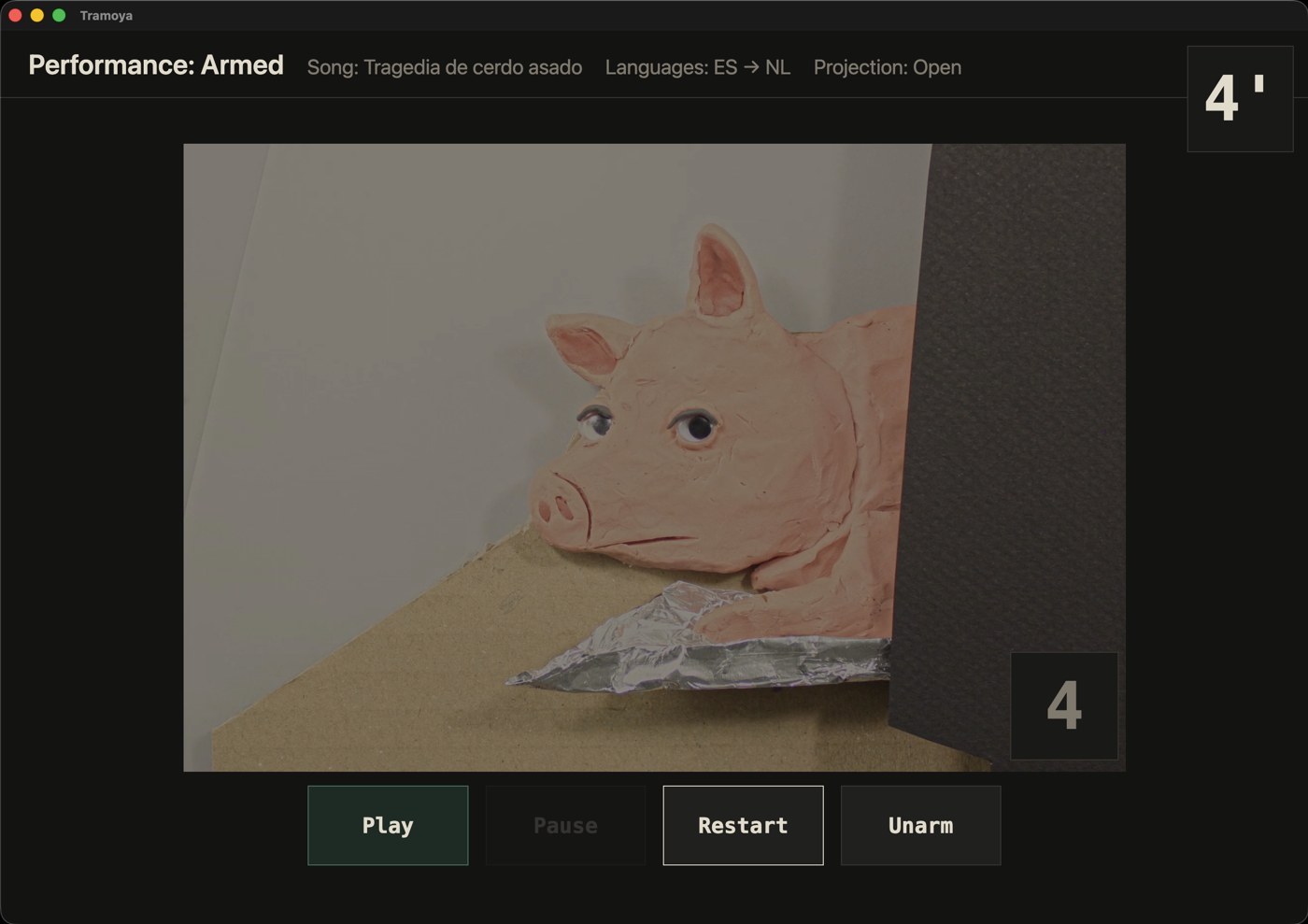
When a song plays against one of my animation films, the film is the clock. The video starts and every line lands on its own, because my hands are on the guitar and the film will not wait for them. This is the one I care most about: something I animated carrying something I wrote, with the words riding on top, and a room reading all three at once.

Pregonero's performing view with a film driving it: the animation playing in the frame, the song, the pair of languages and the projection state along the top, and play, pause, restart and unarm controls underneath.

TWO WINDOWS

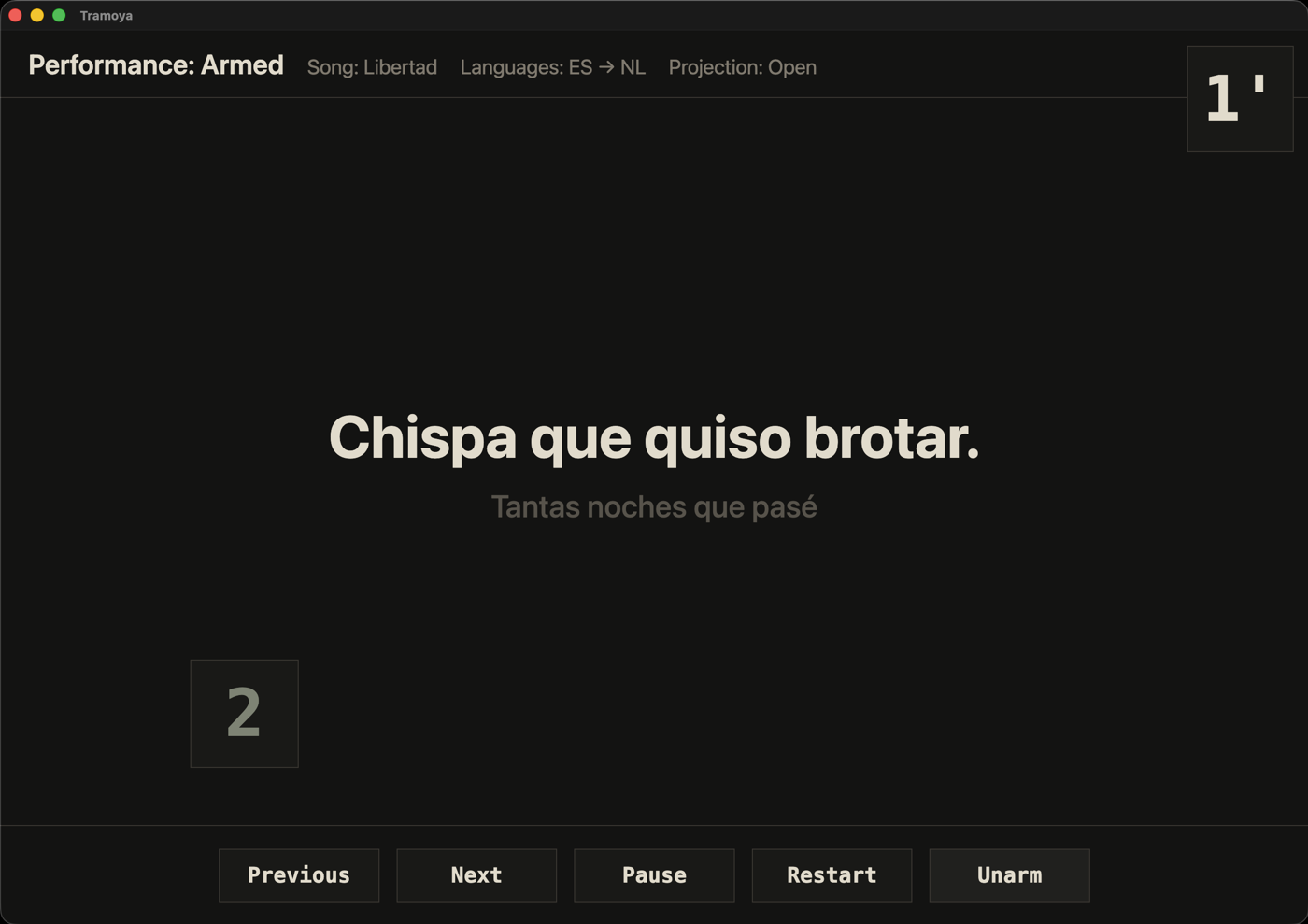
There are two windows: one I look at and one the audience looks at. Mine sits on the laptop and shows the current line, the next line, and the controls. The other goes out to the projector and shows nothing but the words. They are separate on purpose. The audience should never see me searching for a line, and I should never have to guess what is on the wall behind me.

Pregonero's laptop view: the line being sung set large in the middle of the screen, the line coming next in grey beneath it, the song and the pair of languages along the top, and the transport controls along the bottom.
Mine, on the laptop.
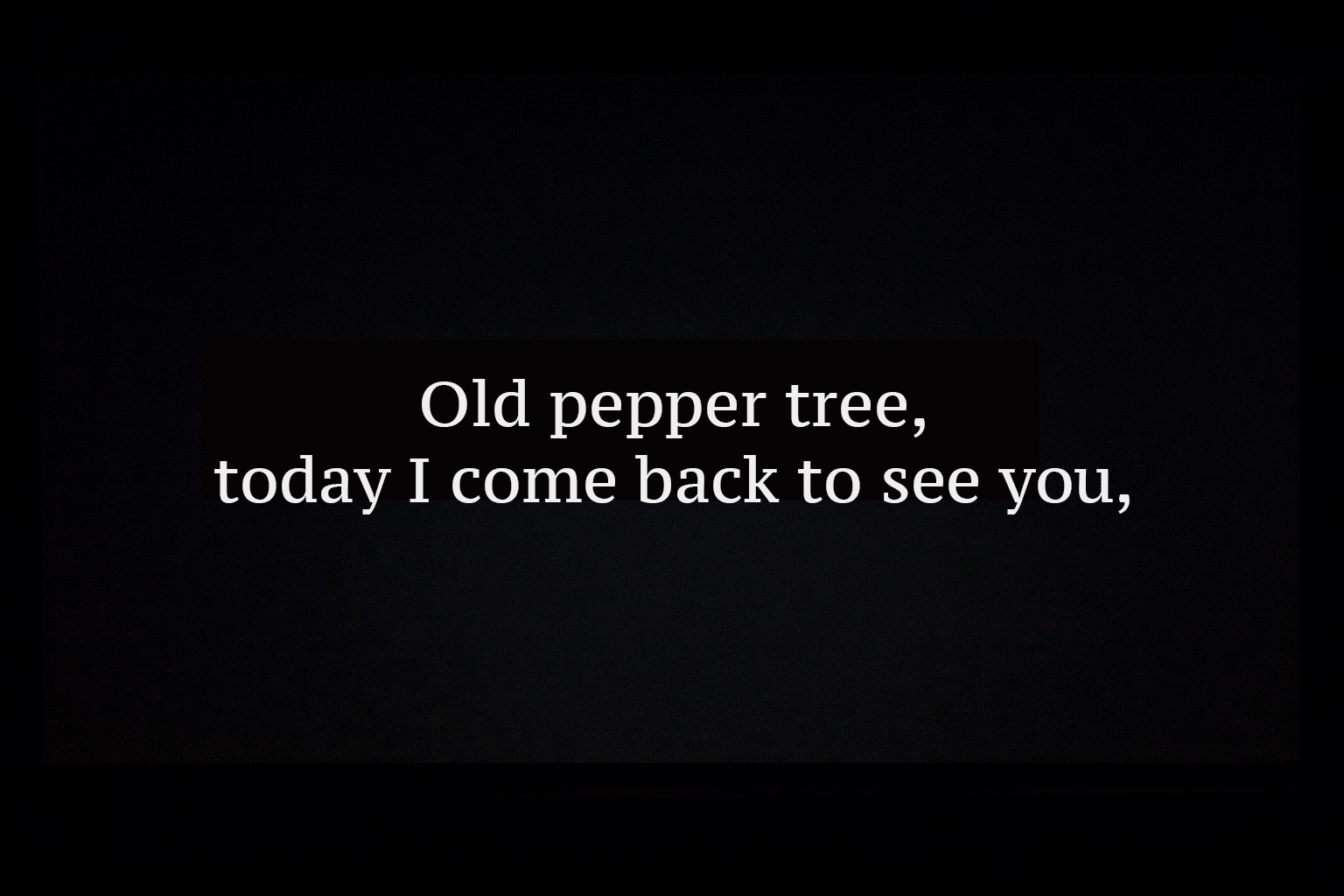
Pregonero's projection view: one line of the song alone on a black field, with no interface anywhere around it.
Theirs, on the wall.

THE WORK IS DONE BEFORE THE DOORS OPEN

The words were timed at a desk, the room was mapped at the venue, and the gig was assembled before I left home. By the time there is anyone in the seats, there is nothing left to decide and nothing to do but sing and move a foot.

What has to be in the room is small.

  • A surface the audience can see: a projector, a screen, a wall.
  • A foot pedal that sends a key press. Any of them will do, and there is no special hardware.
  • The three files: the gig, the room, and each song with its timings.

WHAT IT LEAVES ALONE

It creates nothing and decides nothing. It shows what the files say, and every one of those files was settled before the doors opened.

Nothing you already have is moved, renamed or changed.

And it will not rescue a timing that was wrong. What was wrong at the desk is wrong on the wall, which is exactly why the checking happens where there is still time to do it.

ASK ME FOR A BUILD

There is no packaged download. Write to me and I will send you a build. The only thing I ask back is that you tell me how it went.

contact@changopepper.com